
Mom should have taught you how to brush your teeth. We will teach you how to take care of your face regularly. Moreover, we have already dealt with stereotypes about care and realized that it is not necessary to rub your face to a squeak and rely on scrubs.
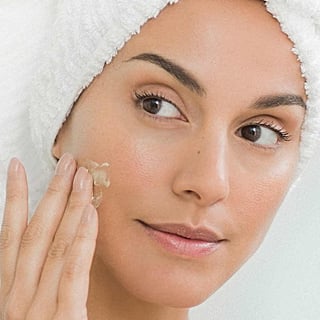
Perhaps before you thought that skincare for a normal person is to wash your face with water. Or worse, the same soap you use on your hands. But in fact, this is the approach of a smoker (and yes, it kills the skin no less than cigarettes). You don’t have an idea to wash your hair with dishwashing liquid – you should treat your face with no less care. But it’s not at all necessary to rush to the other extreme: you don’t have to start 150 different cans in the bathroom, in which even your girlfriend will get confused.
If you start to understand skin care products, it will quickly become clear that it is not so much what cosmetics you choose that matters, but how you use them. Basic care, which will allow you to get maximum profit with a minimum of effort, as it turned out, consists of four stages: cleansing, exfoliating, moisturizing and protecting. Moreover, the last two can easily be combined into one. We explain in detail what these stages include and what tools can be used for them.
1. CLEANSING
Many people cannot imagine washing without foam and believe that the result of cleansing should be “creaky” skin. This is a huge misconception, which, unfortunately, is actively supported even by some dermatologists. Foam is produced by surfactants such as SLS or sodium lauryl sulfate. As hundreds of studies have shown, they irritate and dry out the skin, causing it to produce even more oil as compensation. It turns out a vicious circle: the skin is oily, we wash it with soap, it becomes even fatter.
In a good way, regardless of skin type, you should choose mild cleansers that do not foam. You will be surprised, but with the transition to them, the skin will become less oily and softer, and the unpleasant feeling of tightness will disappear forever.
And if you can’t achieve a feeling of cleanliness without foam, then those surfactants remain for you that practically do not irritate the skin. Choose soft products in packages that foam immediately when pressed. Among them, for example, body lotion with alpha arbutin.
2. EXFOLIATION
Here, too, we will reveal the great conspiracy of cosmetics manufacturers: the scrub does nothing good for the skin. Aggressive physical exfoliation that makes the skin soft actually damages it and makes it rough. The circle turns out again: the skin becomes horny from the scrub, and this makes it necessary to use it more and more often. If you notice this, know that it’s not because you have bad skin, it’s the scrub that’s to blame.
The easiest way to replace scrubs is with acids. Acids exfoliate not by physical action, but by the gentle chemical dissolution of dead cells on the surface of the epidermis. The three most common acids in cosmetics are glycolic, lactic and salicylic. Acids not only renew the skin, making it soft, but also smooth out fine wrinkles, and also fight the dullness of the face and help subsequent care work better. Products with salicylic acid, among other things, will clean the pores and get rid of blackheads due to the fact that they can dissolve fat, unlike other acids.
The easiest format of acids to use is tonics. You can use them every day, but you should focus on the sensitivity of your skin. Start with hyperpigmentation body lotion twice a week and increase as needed. In the evening, immediately after washing, wipe your face well with an acidic tonic and proceed to moisturizing.
3. MOISTURIZING
Moisturizing is necessary for absolutely any type of skin: from extremely oily to extremely dry. Skin type is determined by the amount of fat produced, not water, and it almost always lacks water. This is perhaps the main misconception that people with problem skin face. The worst mistake is to first wash your face with a hard matting agent, and then dry your skin with a towel.
Moisturizing works in two ways, but most creams combine both. The first is water retention, for which components such as glycerin or hyaluronic acid are responsible. They work like tiny sponges that contain water. The second is the “locking” of water. Oils and silicones are responsible for this. They cover the skin with the thinnest protective film that does not allow water to evaporate. Therefore, you need creams that have both components.
Choosing a cream is quite simple: the drier the skin, the denser the texture should be due to the nutritional components. For dry and sensitive skin, HYALOGY P-EFFECT DEEP MOISTURIZER | EXCELLENT MOISTURIZER is a great option, and CLEAR CELL Clarifying Gel Cleanser 3-in-1 gel cleanser based on salicylic acid (BHA Exfoliator) and antioxidants (Arnica Montana / horse chestnut) thoroughly removes impurities, excess oil and make-up.
4. PROTECTION
When we say “protection”, we mean protection from the sun. The sun is one of the strongest factors in skin aging, mainly due to it wrinkles, age spots and loss of elasticity. So you definitely need a tool with the terrible name “sunscreen”.
Sunscreens tend to be quite unpleasant to use and can leave white marks, but it’s possible to find a decent one among the variety. For example, Cosmo sun, a light and fast-absorbing lotion for sensitive skin.
If you are in the sun all day, you need to renew protection every two to three hours, as the filters break down in the sun. If you spend most of the time indoors, then it is enough to use funds only before going outside. Fortunately, a huge number of brands add sunscreens in advance to day creams. This eliminates the need for multiple layers of care. Such products combine hydration, nutrition, and protection.
 Blogger Strikes
Leave a comment